Klára Tüdős is often connected with Hungarian style in a single sentence. That shorthand conceals the core of her career. Her purpose was not to place unchanged village dress on an urban woman. Through theatrical, applied arts and organisational experience, she explored how motif, material and proportion could become modern clothing. Surviving objects and the archive received by the Museum of Ethnography now allow us to examine her method rather than repeat a label.
From stage to salon
Tüdős was born in Debrecen in 1895. She studied in Switzerland and England before continuing at the School of Applied Arts. She worked as a costume designer at the Opera and accepted projects for stage and film. This background shaped her view of clothing. A costume must read from a distance while allowing a performer to move. Colour, silhouette and detail therefore cannot function as isolated decoration.
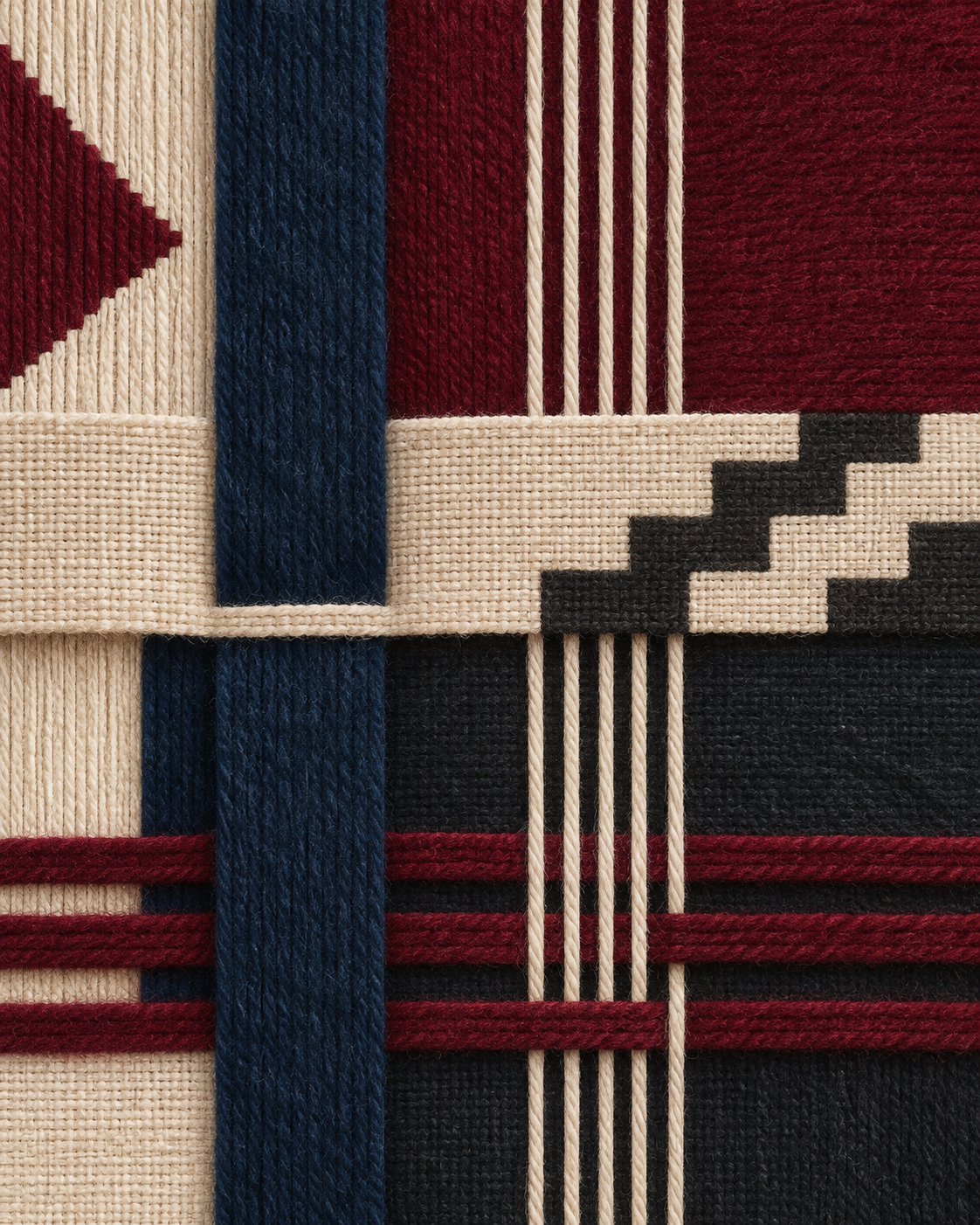
Her Pántlika salon applied this knowledge to urban fashion. Elements of Hungarian folk art appeared not as simple quotations but through seam lines, material pairings and concentrated detail. As artistic director of the Corvin department store, Tüdős also worked on presentation and commercial mediation. She designed not only garments but the meeting between garment and audience.
In Tüdős’s work, Hungarian character was not a badge sewn on top. It was proportion, rhythm and material choice.
What objects tell us
An evening dress and jacket preserved by the Museum of Applied Arts are important because they reveal construction at close range. A museum record identifies material, date and authorship rather than merely creating mood. It allows clothing to survive as design that can be studied instead of legend alone.
A black muslin apron with Sárköz embroidery, dated around 1936 and held by the Museum of Ethnography, illuminates the method from another direction. Light translucent ground and dense embroidery create tension. Folk technique does not appear as a complete costume but on an object that could join an urban outfit. Such a decision requires knowledge of the original method and an understanding of how much ornament the new function can carry.
The history of the archive also shows how easily fashion history disappears when family cupboards, papers and objects do not receive institutional attention. A garment alone cannot explain who wore it, how it was repaired, which occasion it served or what it meant to its designer. Correspondence, photographs and memories create context together.
Fashion and civic responsibility
Tüdős’s career cannot be separated from her public actions and rescue work. During the Second World War, she and her husband Ferenc Zsindely helped persecuted people. They were deported from Budapest in 1951. These ruptures show that fashion is not a light island outside history. A designer’s position, relationships and decisions belong to the legacy as much as the cut of a dress.
The fuller publication of her memoir Rongyok also adds nuance. Its title can suggest textiles, remnants and the way history revalues what once seemed secondary. For a fashion historian, even a rag matters when it reveals the work of a hand or the material shortage of a period.
What a contemporary studio can learn
The first lesson is responsible transformation. A designer working with folk motifs must do more than take a striking surface. They should know where the pattern comes from, its community and ceremonial meanings, who makes it today and how that person is credited. A contemporary garment need not resemble folk costume, but it should not hide its source.
The second lesson is function. Tüdős’s theatre experience suggests that every garment should be judged in movement. An embroidered shoulder succeeds when the arm can rise. An ornate jacket works when it keeps its line while the wearer sits. Motif placement can also serve structure by emphasizing a seam, connecting materials or directing the eye.
The third lesson is documentation. Contemporary Hungarian designers should record material sources, maker names, techniques, fitting changes and repair methods. A working file today may become researchable heritage tomorrow. An accurate label is not administration. It is the future of the object.
Klára Tüdős remains relevant because her work refuses to oppose national identity and modernity. Hungarian character was not a finished recipe for her but a question answered again with every material, body and new situation. That is why her studio remains intellectually open today.