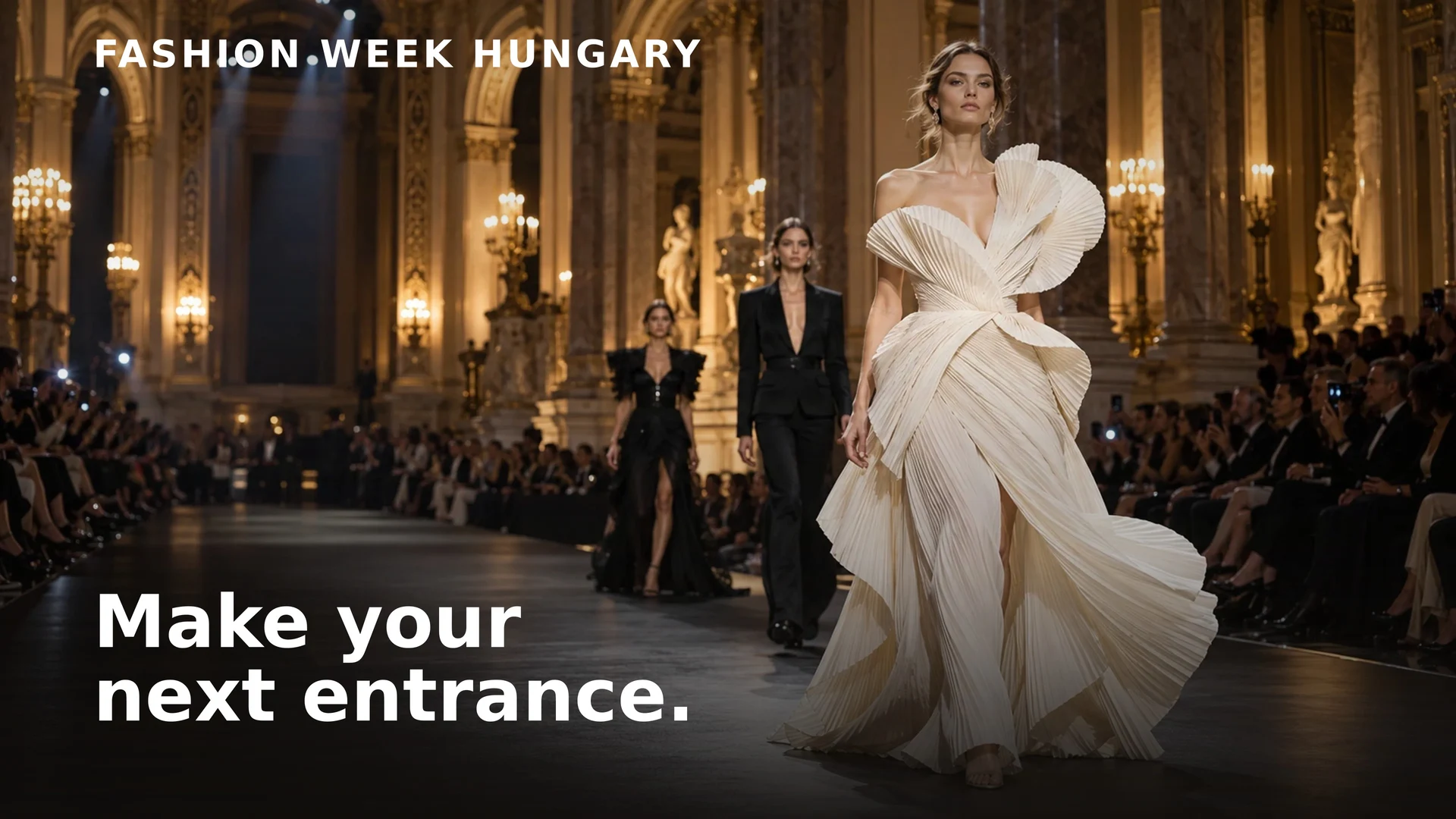
The official programme of Symbol Budapest scheduled the La Dolce Vita Fashion Show 2026 for the evening of 8 October. The ticket page listed doors at 7 pm, a runway presentation at 8.30 pm and closing at 11.30 pm, while the related preview described more than ten Hungarian brands and an on-site pop-up shopping opportunity. The structure matters because it treats the runway not as an isolated spectacle but as part of one path from discovery to purchase.
According to the announced programme, the evening combined a show, meetings with brands, a retail point and a social event. Fashion Week Magazin analyses the business logic of that format rather than presenting an on-site report. No verified figures are available for attendance, sales or professional outcomes, so no such claims are made here.
Shortening the path from runway to fitting room
At a conventional show, a viewer sees a silhouette and later has to locate the brand, online store and right size. A pop-up reduces that distance. If garments can be handled, tried or ordered at the venue, interest is less likely to disappear before the next step.
This is especially relevant to small Hungarian labels. Attention is expensive, maintaining a store is unrealistic for many, and multi-brand retail opportunities are limited. A shared event can distribute the cost of audience building and venue hire while allowing each participant to tell a distinct story.
The format works only when spectacle and commerce are connected. Visitors need to know which look belongs to which brand, where the product is available, when it can be delivered, which sizes are made and whom to contact. A well edited QR code, brand list or line sheet may be more valuable than another layer of general decoration.
What a brand must prepare
The most dramatic runway piece is not always the most useful retail product. An opening or closing look may be sculptural and memorable, but the pop-up should also offer entry points such as a smaller accessory, an easier-to-size top or a special piece available for preorder. The aim is not to make everyone buy the same item but to offer a clear next step for different budgets and bodies.
Inventory information matters too. A sample must be labelled as such. For preorders, the expected delivery time and payment terms should be stated before purchase. Excitement at the venue cannot replace accurate customer information.
A show becomes a business tool when the relationship has a clear next step after the applause.
The event can also support data collection, but only transparently and voluntarily. Newsletter subscriptions, sizing requests or appointments can help later sales. An unstructured pile of names and phone numbers is not a strategy.
What a buyer should examine
A direct meeting creates room to ask about fabric, manufacturing location, alteration and care. The quality of these answers often reveals more about a brand's readiness than runway photographs do. Return and exchange conditions should also be clarified, particularly for preorders and customised sizes.
A multi-brand evening creates lasting value in Hungary only if it offers more than one night of visibility. Participating labels must remain findable after the event through clear product pages, contact details and ordering processes. The La Dolce Vita format announced at Symbol is therefore instructive not because of the venue's glamour, but because it placed attention, personal contact and a possible purchase within the same evening.
Shared presentation also requires editorial discipline. If too many labels communicate in the same way, visitors struggle to remember them. Sequence, music, light and visible brand names are therefore commercial questions. Participants should decide which product must be remembered and repeat the same visual cue in the pop-up area.
The next test is continuity
The event's commercial result can only be judged from later and credible data. The format would prove its strength if participating labels could measure how many enquiries became fittings, preorders or repeat customers. In that sense, the runway is not the end of the process but a carefully designed first meeting.