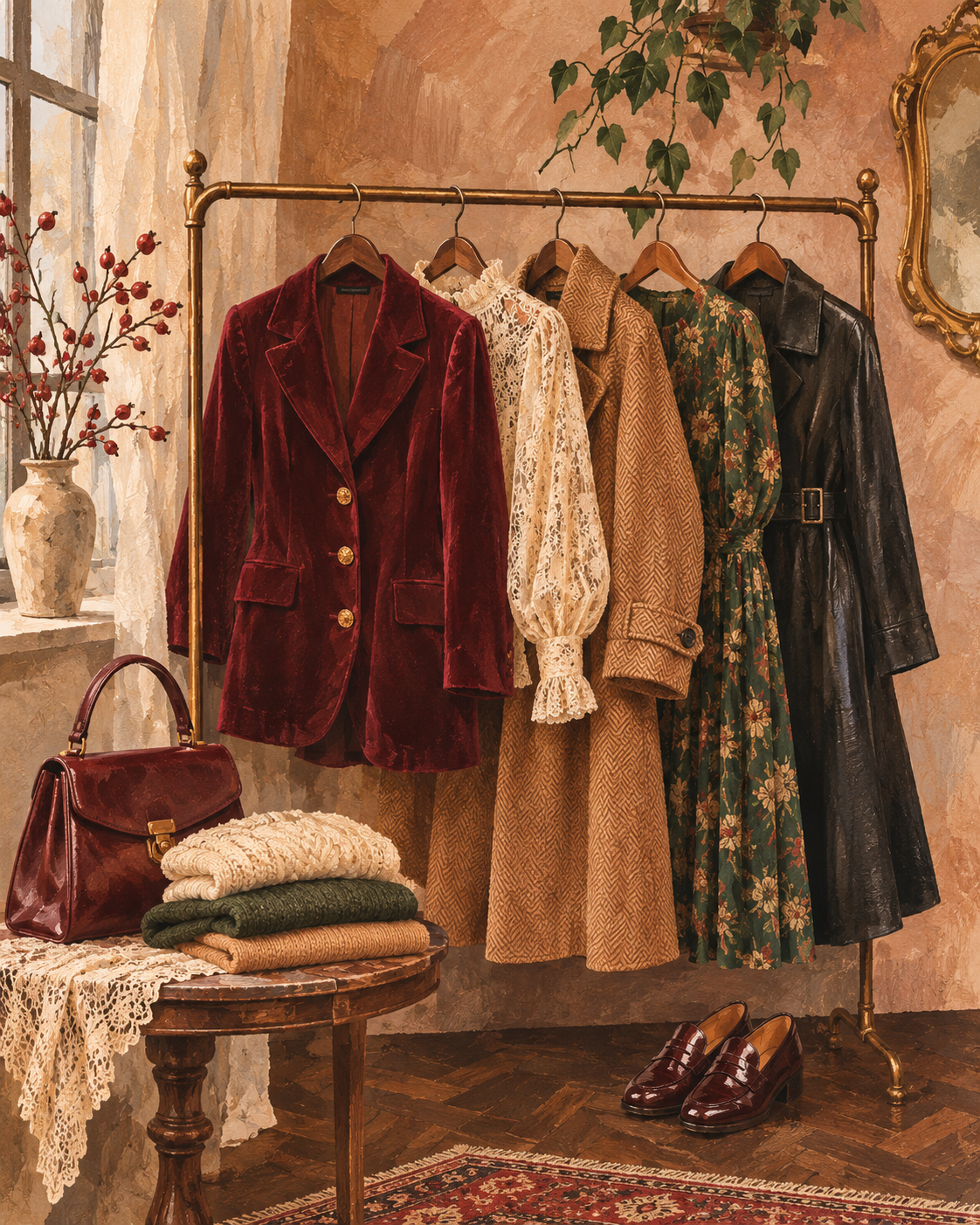
The hardest part of dressing for Budapest in November is changing temperature. A tram stop feels cold in the morning, the carriage is warm, and wind or rain can rewrite the plan later. HungaroMet climate normals for 1991 to 2020 place the November mean at 5.9 degrees Celsius, the average high at 9.4 and the average low at 3.1. These are not a daily forecast. They show why layering is a functional question as well as a style decision.
1. Thin base and open middle layer
A plain cotton T-shirt or fine long-sleeved top can sit under a cardigan, overshirt or light knit. Keep the base closer to the body and make the middle layer easy to open. That way a heated room does not require dismantling the whole outfit. A small line of lighter fabric at the neck or cuff gives dark autumn colours a clean frame.
2. Short top and high waist
A waist-length jacket, cropped wool coat or blazer works with high-waisted straight or wide trousers. The volumes balance each other. When every piece is oversized and long, the body can disappear. One shorter line restores structure while a warm base layer protects the practical function.
 Archival Budapest street scene, 1961. Photo: FOTO:FORTEPAN / MZSL / Ofner Károly, CC BY-SA 3.0.
3. Long coat and narrow inner column
Under a below-knee coat, try a top and trousers in related tones. Charcoal, deep brown or navy create a continuous vertical field while the coat can be lighter or more textured. This is visual order rather than a slimming trick: the eye first reads one surface, then notices the material of the outer layer.
In effective layering, every garment has a job and at least one layer is easy to remove.
4. One strong colour and three quiet surfaces
In grey Budapest light, a burgundy scarf, cobalt bag or green knitted hat can do more than several competing patterns. Keep the other areas in wool grey, black and off-white. The accent looks deliberate when a smaller detail echoes it, such as socks, gloves or a glasses frame.
5. Shoes that survive the route
Street style here is literally about the street. Cobblestones, tram steps and wet pavements need a stable sole. A leather ankle boot, substantial loafer or simple grippy sneaker can work when its upper suits the weather. Grip is not the same as waterproofing, so treatment and material matter more than a fashion label on rainy days.
6. The bag closes the proportion
A medium, defined bag balances a large coat. A tiny bag can disappear, while a very soft oversized bag adds more volume to the upper body. A cross-body strap should not crush the coat. A shorter shoulder strap or structured top-handle shape often creates a cleaner line.
Do not finish the test at the mirror. Sit down, raise your arms, add a backpack, then open and close the coat. If the middle layer rides up, a strap twists the collar or trousers pull while sitting, the proportion works only on paper. A useful outfit stays ordered after five minutes of movement.
Build a rain version too. Exchange wool for a water-repellent outer layer, a long scarf for shorter neck protection and an open bag for a closing shape. The colour order and silhouette can remain while the materials respond to weather.
The photographs do not document today's pedestrians. The contemporary portrait was made in June 2025 and the archive image dates to 1961. Together they still reveal the same relationship between coat, bag, glasses and posture on a Budapest street. Choose one proportion, test it on your real route and keep only what works while sitting, walking and moving indoors.