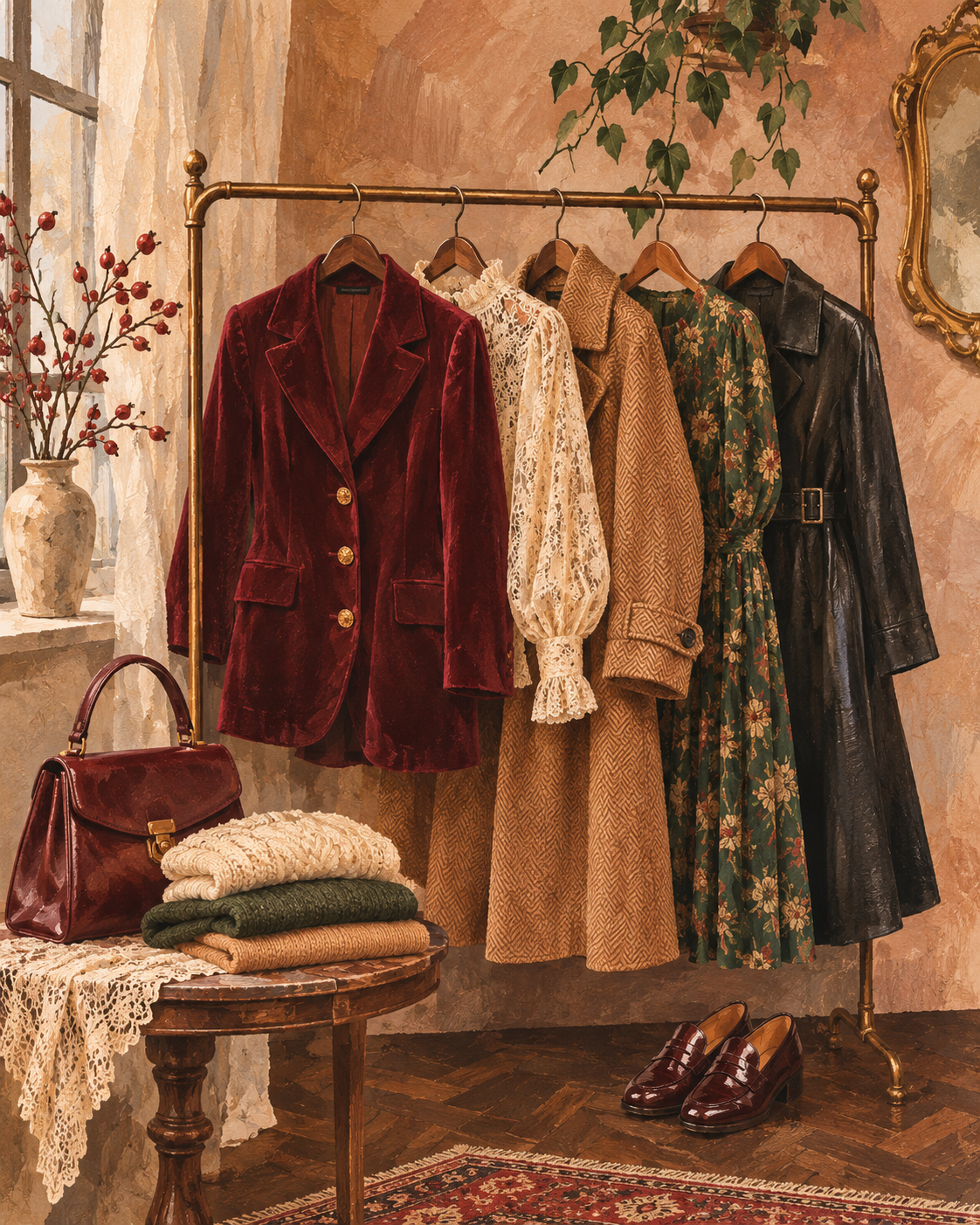
Two clothing markets with different characters offer a Budapest programme on 8 November. Gardrób+Sufni at the ELTE Gömb Aula follows the community market model of private sellers, while the vintage event at Klauzál Market Hall promises a more curated selection built around periods and distinctive pieces. The two locations answer the same question differently: how can a garment already in circulation find a new wearer?
Bring a task before you bring a bag
Secondhand shopping can easily become aimless collecting. Before leaving home, name three actual gaps in your wardrobe. They might be a warm transitional coat, well cut wool trousers or leather shoes suitable for everyday use. A concrete list filters out pieces that are exciting on the stall but connect with nothing at home.
Bring a tape measure, a thin top for trying things on and a bag that protects purchases. It also helps to note your shoulder, chest, waist and hip measurements. The size on a vintage label often does not correspond to current sizing, while centimetres are less deceptive.
A good secondhand purchase is valuable because it works in today’s wardrobe, not simply because it is old.
Six checks at the rail
First hold the material toward the light. Moth damage, thin underarm areas and hidden stains become easier to see. Second inspect the seams, particularly at the seat, pockets and zipper. Third test every closure, including buttons, snaps, zippers and hooks.
Fourth check the lining, because replacing it may cost more than the coat. Fifth smell the material. Storage odour can often be treated, while smoke or strong mildew may be persistent. Sixth ask whether the item can be combined with at least three garments you already own.
For shoes, the angle of the sole and heel says more about remaining life than a shiny upper. On bags, handle attachments, worn corners and a sticky interior are critical. With knitwear, stretch the surface gently because repaired holes may only appear under tension.
Community wardrobe and vintage are not the same
The official Gardrób description defines the event as a secondhand clothing market for private and non professional sellers. Expect everyday labels, mixed sizing and room for negotiation, but also wider variation in condition. The Gardrób+Sufni name signals that household objects may appear alongside clothing.
At the Klauzál vintage market, curation and period character are stronger. Check labels, fibre composition and historical features of the cut. An older jacket may use excellent wool, yet its shoulder pad or sleeve length may require alteration. Add cleaning and repair to the final cost.
The best purchase still makes sense on the way home
Choose between the markets according to your goal rather than atmosphere. A community market may suit someone seeking basics, lower prices and a broad range of sizes. A shopper looking for unusual construction, a particular decade or rarer fabric may find more at the vintage event.
Success on Sunday is not measured by the number of bags carried home. It is achieved when an existing garment gains more useful life and the buyer understands more clearly which materials, proportions and condition fit their own life.
Include the next step in the price
When deciding, separate an easily repaired flaw from a structural problem. A missing button, loose hem or replaceable zip is usually a predictable cost. A worn underarm, weakened shoulder seam, split synthetic leather or deformed shoe sole affects the material itself. In those cases, a low stall price is not necessarily good value.
Ask the seller what they know about the age, material and previous repairs, but compare that information with your own inspection. For a branded bag or an unusually high price, proof of authenticity is also the seller's responsibility. A label alone is not enough if the stitching, hardware and serial information are inconsistent.
Do not put everything straight into the wardrobe when you get home. Cleaning appropriate to the material, airing and separate storage when necessary also protect the clothes you already own. Wool, silk, leather and modern synthetics do not require the same treatment. If care is uncertain, include professional cleaning in the full purchase cost. That prevents an apparently inexpensive find from becoming an expensive, unwearable compromise.


