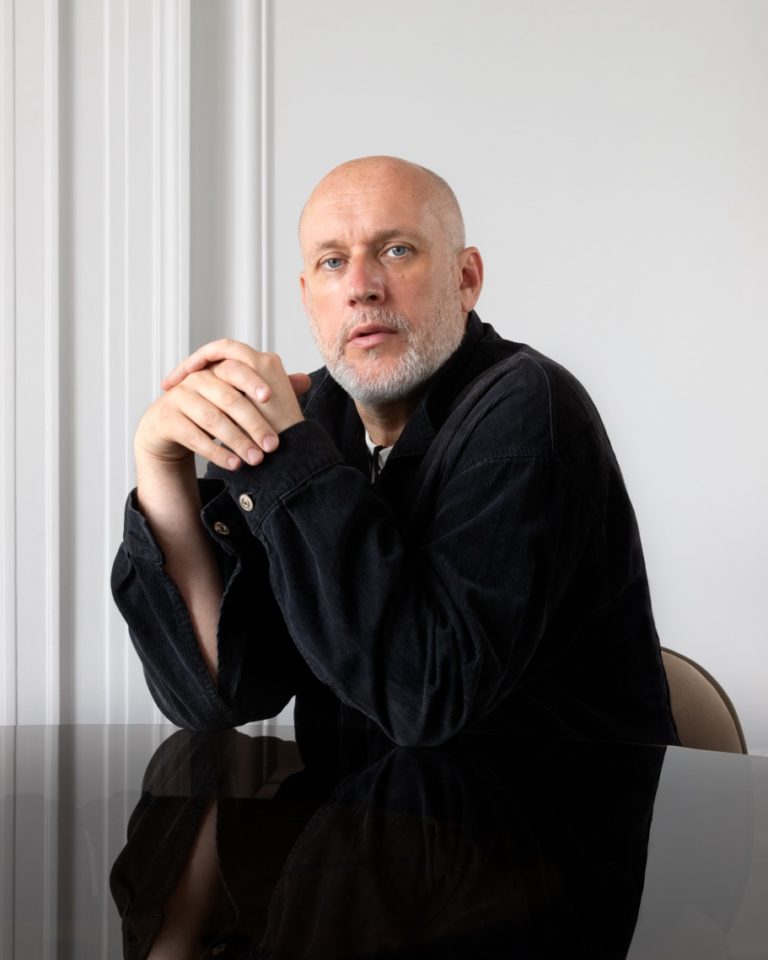
Peter Copping took artistic responsibility for Lanvin’s womenswear and menswear collections in September 2024. At the time of his appointment, the house emphasised experience rather than revolutionary slogans. He had worked at Sonia Rykiel, spent more than a decade at Louis Vuitton with Marc Jacobs, led Nina Ricci and Oscar de la Renta, and later worked in Balenciaga’s couture atelier.
Two years later, a Wallpaper interview shows that this career does more than lend authority. It defines his method. Copping treats the clothes, the team and the search for fabrics as the anchor of design.
Stability has a silhouette too
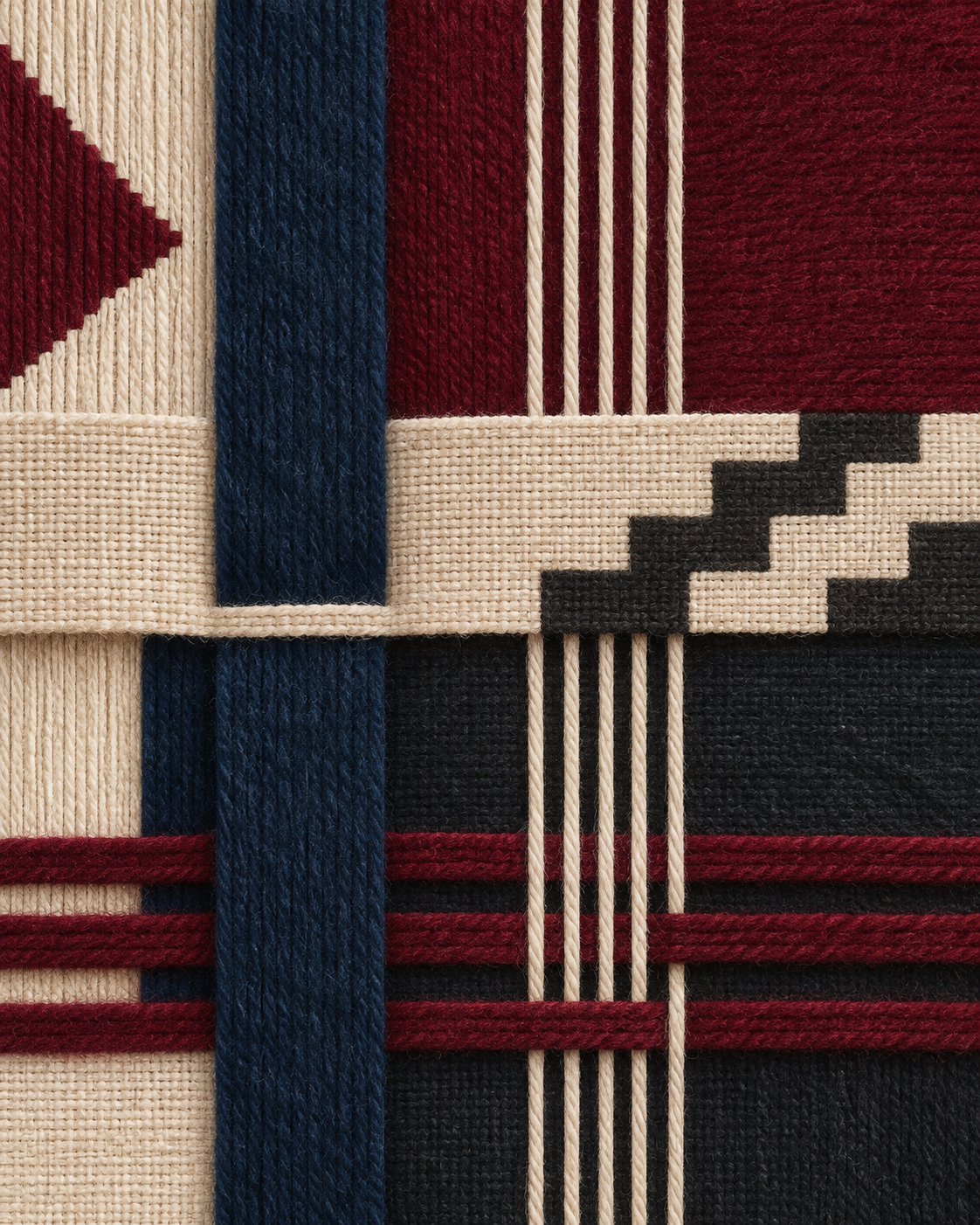
A historic house often tries to start a new era with one recognisable gesture. Copping is instead reorganising Lanvin’s codes gradually. The centenary of the menswear line, launched in 1926, is not used as nostalgic scenery. Flannel, checks and tailoring proportions associated with menswear move into the thinking behind the women’s collections as well.
The important detail is that the historical reference does not become costume. Draping, soft shoulders, long coats and skirts that move around the body sit alongside traditionally masculine materials. In Lanvin’s official 2026 imagery, the tension between structure and ease gives the clothes their presence.
The most useful tool in rebuilding the house is not a logo but a tailoring decision repeated with discipline.
Jeanne Lanvin’s legacy as a working method
Copping points to Jeanne Lanvin’s range. The founder began as a milliner and went on to work across womenswear, menswear, childrenswear, fragrance and interiors. That history could encourage a house to open too many categories at once. Copping draws the opposite conclusion: a smaller house must choose its timing.
This matters commercially. A luxury brand depends not only on its creative image but on development capacity, production, distribution and customer trust. Expanding too quickly can dilute the quality on which a new era is supposed to stand. Copping therefore foregrounds pieces that feel special and are unlikely to be seen everywhere.
A lesson for a Hungarian label
Lanvin’s scale and history cannot be compared directly with an independent Hungarian atelier. The method can still travel. First establish the garment’s structure, material logic and production discipline. Only then should a brand add categories, stores or a spectacular campaign.
Hungarian designers may find particular value in the deliberate exchange between menswear and womenswear codes. A collection does not become contemporary simply by receiving a gender neutral label. It becomes convincing when proportion, shoulder, waist, fabric weight and movement form a coherent system.
The key line in Copping’s interview can be kept short: it is about the process. Lanvin’s next seasons will show whether this quiet construction can create a strong commercial rhythm alongside professional credibility.
The product must prove continuity
The risk of process led rebuilding is that it can look too quiet from the outside. Audiences usually want to identify a new creative era at a major house with one image, one bag or one spectacular show. Copping's approach requires more attention because repeated proportions, materials and tailoring solutions become house codes only when several seasons are placed side by side.
In Lanvin's 2026 imagery, a long vertical line, a relatively close upper body and a moving lower section create a recognisable rhythm. In coats, the discipline of the shoulder and lapel holds softer surfaces together. In womenswear, drapery does not sit on the body as decoration; it organises weight and movement. None of these decisions is loud alone, but together they build a distinct product language.
The commercial test is harder. Positive press and professional approval become lasting results only when a customer feels in the fitting room the same quality promised by the show images. Sizing, internal construction, material choice and delivery timing all need to be consistent. Rebuilding Lanvin is therefore not only a creative assignment. The studio, suppliers, commercial team and communication must find the same pace.
Copping's career can be an advantage because he has worked in both couture and ready to wear environments. Couture discipline helps with detail, while ready to wear experience is a reminder that a garment is ultimately judged on a moving body, in real life and at a specific price. The coming collections will need to prove that balance repeatedly.