Eighty garments in an American museum
Azzedine Alaïa: Sculpting Fashion opens in San Francisco on 21 November and runs at the Legion of Honor until 11 April 2027. The museum describes it as the first major United States retrospective to examine the work of the Tunisian-born, Paris-based designer in depth. Eighty garments trace how body, material and construction became the three foundations of Alaïa's language.
Curators Laura L. Camerlengo and Olivier Saillard organise the exhibition by theme rather than strict chronology. Body-conscious knitted and bandage dresses appear with sculptural forms, tailored suits, black and white work and constructions in which seams and material tension become the decoration.
The body is not a mannequin
Alaïa is often reduced to closeness to the body, yet that does not simply mean a tight cut. His clothes begin with the relationship between shoulder, waist and hip, then use knit, leather or exact seams to balance movement and support. Fabric does not merely sit on the body. It enters a dialogue with it.
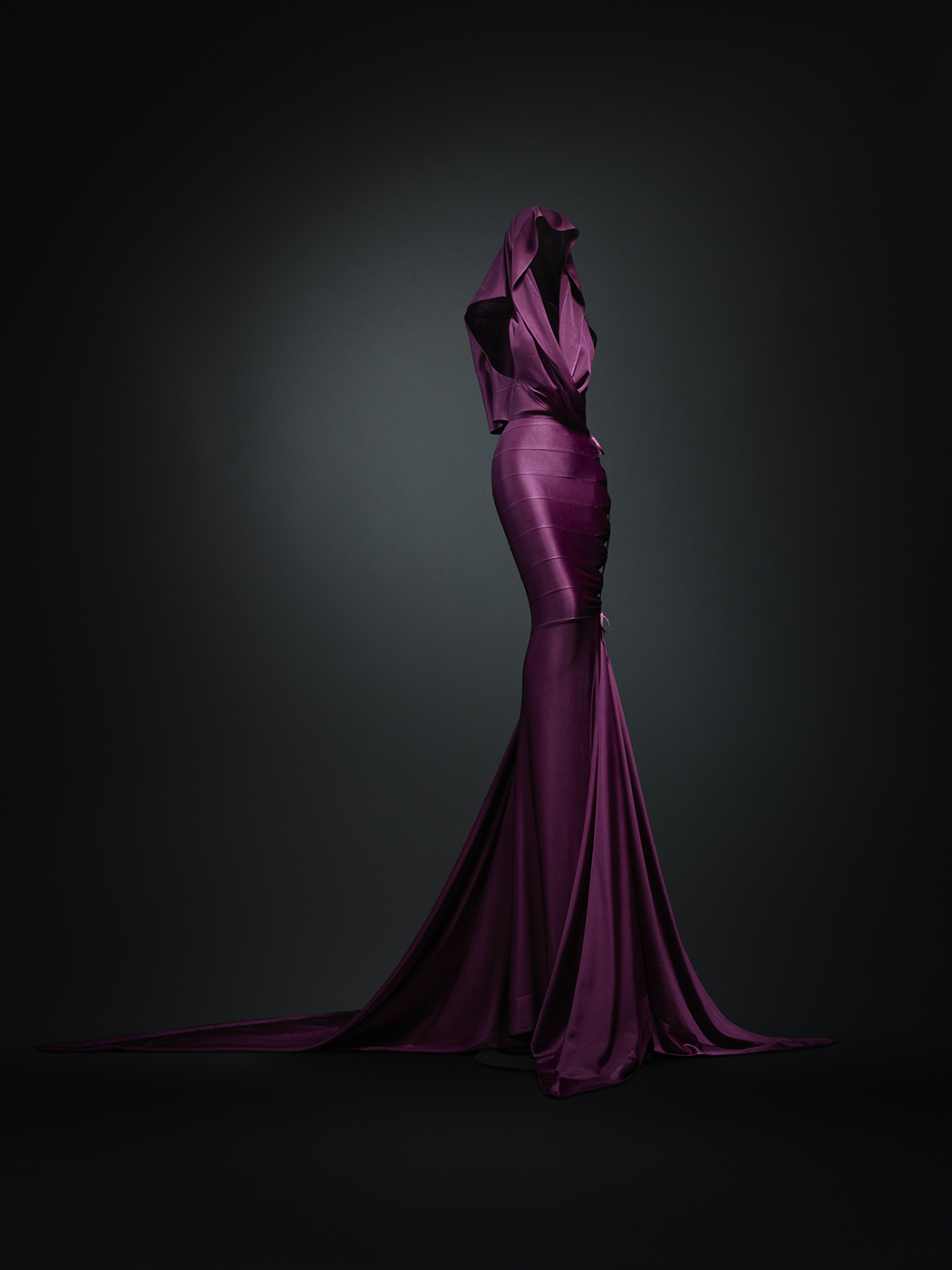
The official image shows a 1986 dress made for Grace Jones. Its surface is glossy and deeply black, sculpted around the shoulder and hip while preserving a clear waist. It demonstrates how Alaïa created drama through the rhythm of construction rather than added ornament.
In Alaïa's clothes, form does not hide the body. It demands more precise attention to it.
A personal collection and a wider history
The exhibition also draws on Alaïa's historical fashion collection. Garments by Balenciaga, Schiaparelli and Vionnet sit near his own work. The comparison is more than homage. It shows how he studied earlier masters' cutting, weight distribution and material handling, then transformed those lessons into a recognisable system.
Vogue's preview stresses the human touch of craft. That argument feels timely in a market where instant image can precede construction. The exhibition suggests that Alaïa's legacy is not one body-hugging silhouette but a long process of fitting, undoing, resewing and understanding material.
The structural lesson for Hungary
For Hungarian designers and fashion students, the useful lesson lies in the distance between a source and a finished piece. Studying historical dress is not copying when the principle of the cut is reborn in a new material, proportion and function. Alaïa's collection shows how an archive can also be a workshop tool.
The eighty garments become public only on 21 November, so this is a preview rather than an on-site review. The installation and catalogue will reveal how closely visitors can inspect seams and surfaces. In this body of work, that proximity decides whether legend becomes understandable professional knowledge.