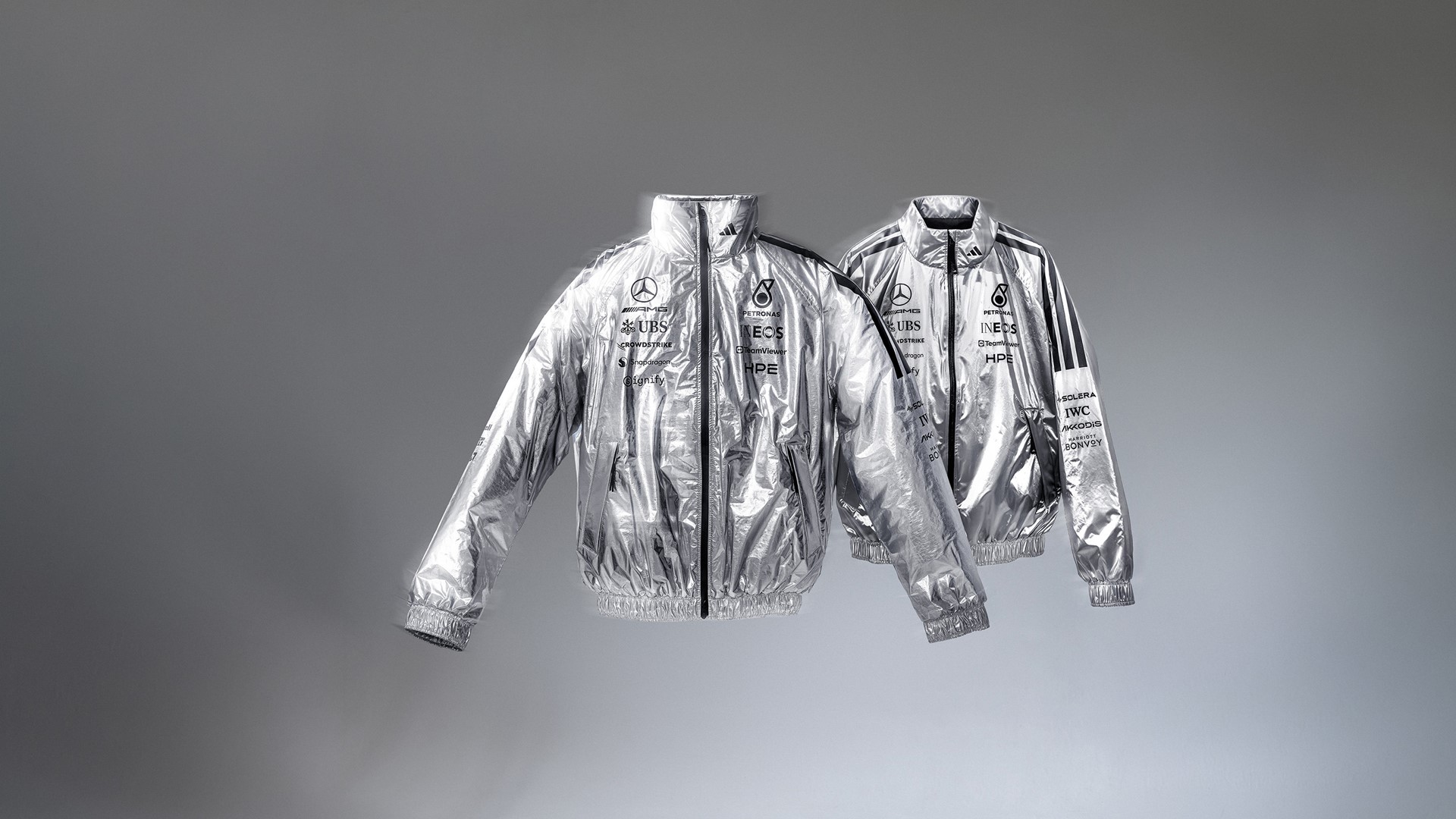
The silver surface catches the light first. Only then does it become apparent how different an object can occupy the same familiar shape. On September 28, adidas and the Mercedes-AMG PETRONAS F1 Team introduced two streetwear versions of the Silver Jacket. The more emphatic Pro carries forward the appearance of the racing cooling jacket, but, according to the manufacturer, warming padding replaces the cooling system. Fashion borrows the silhouette of an engineering solution while rewriting its original task.
A familiar appearance, a different job
To understand the 2025 predecessor, it helps to return to the paddock. GPFans’ technical explanation published last April described the drivers’ striking outfit as equipment for managing heat, combining a fan-based solution with a cooling vest. For George Russell and Kimi Antonelli, the generous volume was therefore more than a styling gesture. This distinction matters to anyone assuming that the new garment is simply a retail version of the same technology.
In the official product photograph, the Pro draws a broad, inflated-looking upper body, while the second version has a quieter outline. Silver provides a unified visual statement on both: folds and reflected light become the decoration. Alongside the branding, volume itself serves as an identifier. In our editorial reading, this makes the launch more than another team jacket. It relocates a recognisable workwear silhouette.
The compelling detail is that the shape remains while its purpose reverses.
What is the customer buying?
The announced European price is €250 for the lighter version and €500 for the Pro. These are published euro prices, not confirmed Hungarian shelf prices. The difference should not automatically be read as a premium for a logo: the comparison involves two differently constructed jackets. Before buying, the relevant product page is the place to check lining, sizing and availability.
For dressing in Budapest, the most useful lesson is proportion. A narrower or straight-cut lower half could bring composure to such a broad upper body. A matte fabric paired with the shiny jacket creates contrast without requiring another bright colour. This is a styling suggestion, rather than an official collection look: the shape offers something to consider even if the reader never buys the product.
In a fitting room, we would pay particular attention to the relationship between shoulder, sleeve and waist. If a jacket expands in every direction, the wearer's shape can disappear beneath it; when the fastening and hem frame the body well, that volume appears deliberate. How it works unfastened matters just as much. A distinctive outer layer still needs to make sense during everyday movement.
The September launch offers a useful example of translation between technical clothing and fashion. The purchase is not the driver's working situation, but its visible sign. The next question is whether the Silver Jacket develops a character of its own on the street, or whether its strongest image remains attached to the paddock.